
What the poem was reaching for
The Cutting Room changes its question — and opens the slab to your poems.

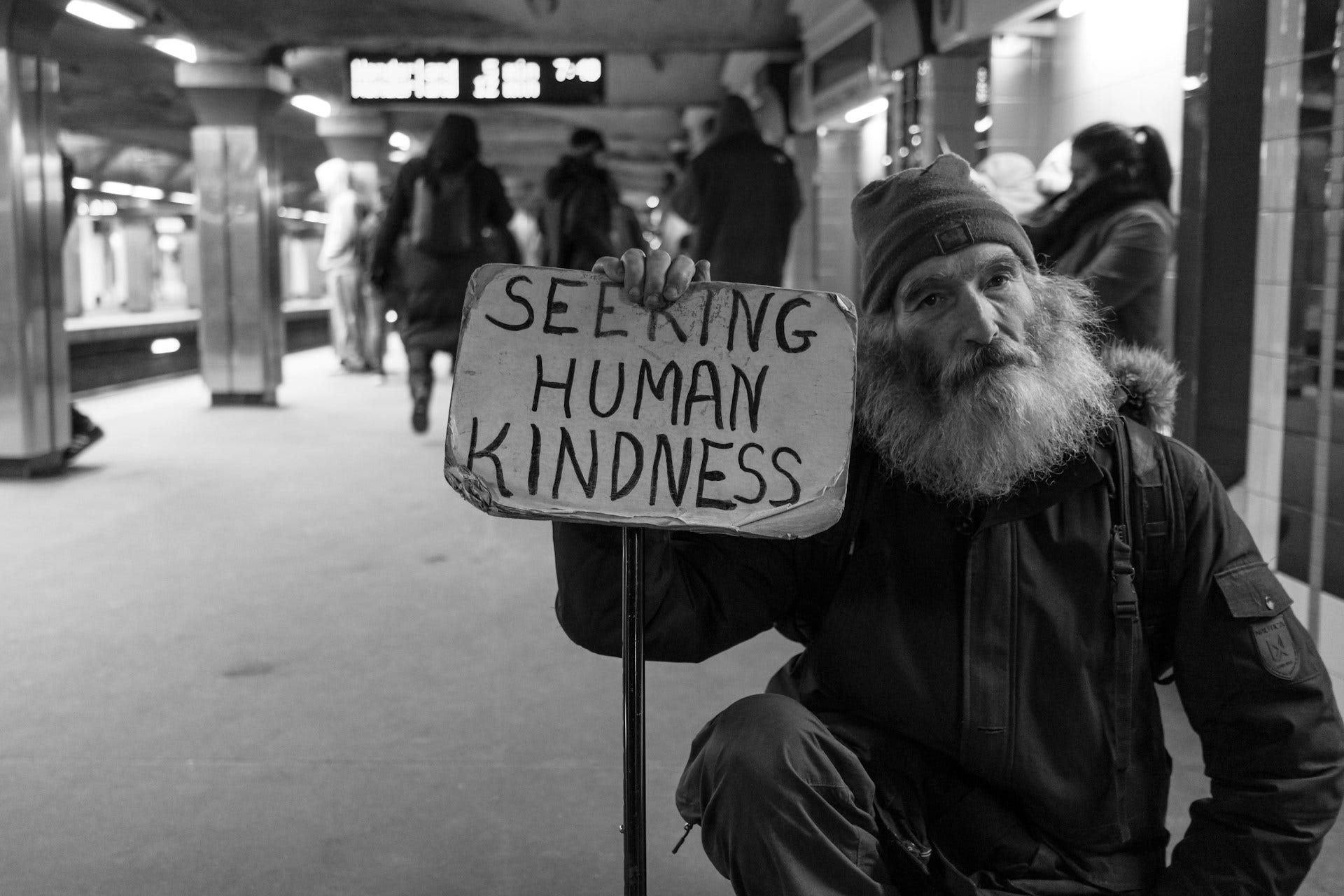
Photo by Matt Collamer on Unsplash
For seven posts now, the operative question of this publication has been what is wrong with this draft. I put a poem on the slab — usually one of my own — named the failure mode, made the cut, and defended what survived. The register was the autopsy, and the first principle was honesty over kindness. I still believe in the honesty. What has changed is what I now think the honesty is for.
The change came from outside my own drawer. A poet whose work I admire invited me to look at one of her poems. I ran the usual analysis — the same taxonomy I run on my own extinction drafts — and found myself, without deciding to, warming the account of what I found. Partly that was courtesy: it is one thing to be harsh about my own lines, another to be harsh about someone else’s. But when the review was done, I was left with a question I had been avoiding. If I could read her poem for what it was reaching to become, rather than for the ways it fell short — why was I not reading my own the same way.
So the question changes. Not what is wrong with this poem, but what happened to this poem — what was it reaching for, and where did the reach fall short.
This is a smaller change than it sounds, and a larger one. Smaller, because the diagnosis does not move. The abstraction is still reaching past the concrete particular; the closer still broadens where it should narrow; the metaphor’s vehicle still runs off with the line and leaves the subject dark. The taxonomy holds. The cuts are the same cuts. Larger, because a failure mode was always secretly a description of a reach — a way the poem produces the appearance of depth without arriving at the thing itself — and I had been filing it under the language of fault. A poem that reaches for the universal in its final line and lands on a proverb has not committed an error. It has reached, and the reach has not yet landed. That is a history, not a verdict.
I owe the reframe to Glyn Maxwell, who retires what is wrong with you in favour of what happened to you, and insists a poem has nothing inherently wrong with it — that it is not mistaken. He also insists this is not permission for anything to pass. The path stays narrow. The standard does not soften. What changes is that the poem is treated as a creature reaching for its life in the little time it has, and the editor is another creature, not a distant authority handing down the answer before he has met the patient. I find I have been standing in that second position all along without naming it, because the poem on the slab has almost always been mine. When the writer and the diagnostician are the same person, the cut is visibly a decision made by someone at risk — not a finding declared from nowhere.
Three things follow, and they are changes of register, not of rigour.
Failure becomes reach. The modes keep their names, but the umbrella word does less pretending. Where the poem is still reaching is a truer heading than where the poem fails, because it names a direction of effort rather than a defect, and the cut then reads as help toward the reach rather than correction of a mistake.
Cutting becomes clearing. The action is identical — the same reversible cut, the same line lifted to see whether the poem stands without it. But Maxwell’s phrase for what the cut is for is clearing the way for song in the creature, and that is the more honest account of what I am doing when I drop the last tercet and leave the reader with the single bone. I am not correcting the poem. I am clearing what stands between it and the thing it was trying to disclose.
Honesty becomes a species of kindness, not its opposite. This is the principle I had wrong. Honesty over kindness set the two against each other, as if truth were the thing you administered once you had steeled yourself past sympathy — which is exactly the posture of the worst kind of reader, the one who knows the answer before he knows the poem. Kindness shares a root with kin. The honest reading is the one that takes the poem to be the work of a fellow creature reaching for something, and reads it by the lights of our kind. The self-autopsy was always the proof of this. I have never asked a poem of mine to bear anything I would not put my own name under.
Which brings me to the door I want to open.
If the question is what was this poem reaching for, then it is a question I can only answer for so many poems of my own. I would like to start reading yours.
From the next few weeks, I am opening a small number of slots each round for subscribers to send me a poem for the Cutting Room treatment. Any subscriber can put a poem forward. The slots are deliberately few — I would rather read a handful closely than a hundred at arm’s length — so each round will take the first small batch and close.
Here is how it will work, and the terms are built to protect the poem, not the publication. I will read the poem in full and diagnose one reach — the single thing it is most legibly reaching for and has not yet landed. What appears in the Cutting Room is a fragment only: the few lines that carry the reach, never the whole poem. The rest stays in your drawer, unpublished, still eligible for every competition and journal you might send it to. Submission stays anonymous by default; your name appears only if you ask it to. And the reading is the reading I give my own work — the same taxonomy, the same cut, now asked in the same key: not what is wrong with your poem, but what it was reaching for, and how to clear the way to it.
For now this is free, and I will be honest about why. It is here to bring more poets into the room, to make the Cutting Room a place where the reading happens with you rather than at a distance. In time it may become something I offer subscribers who support the publication. For now I simply want your poems on the slab beside mine.
If you would like to be read, watch for the submission post that follows this one — it will carry the form, the line limit, and the count of slots for the first round. Bring the poem you cannot tell whether to trust. That is usually the one still reaching.
— Adam
An important insight — truth delivered with kindness. That’s how truth gets heard.