

The Cutting Room
Most writing about poetry is about how poems succeed. There are good teachers of that, and I owe them much of what I have — but the Cutting Room is for the other thing: what goes wrong in a draft, named precisely, in this line, and what the repair would be.
This Substack is for the autopsy.
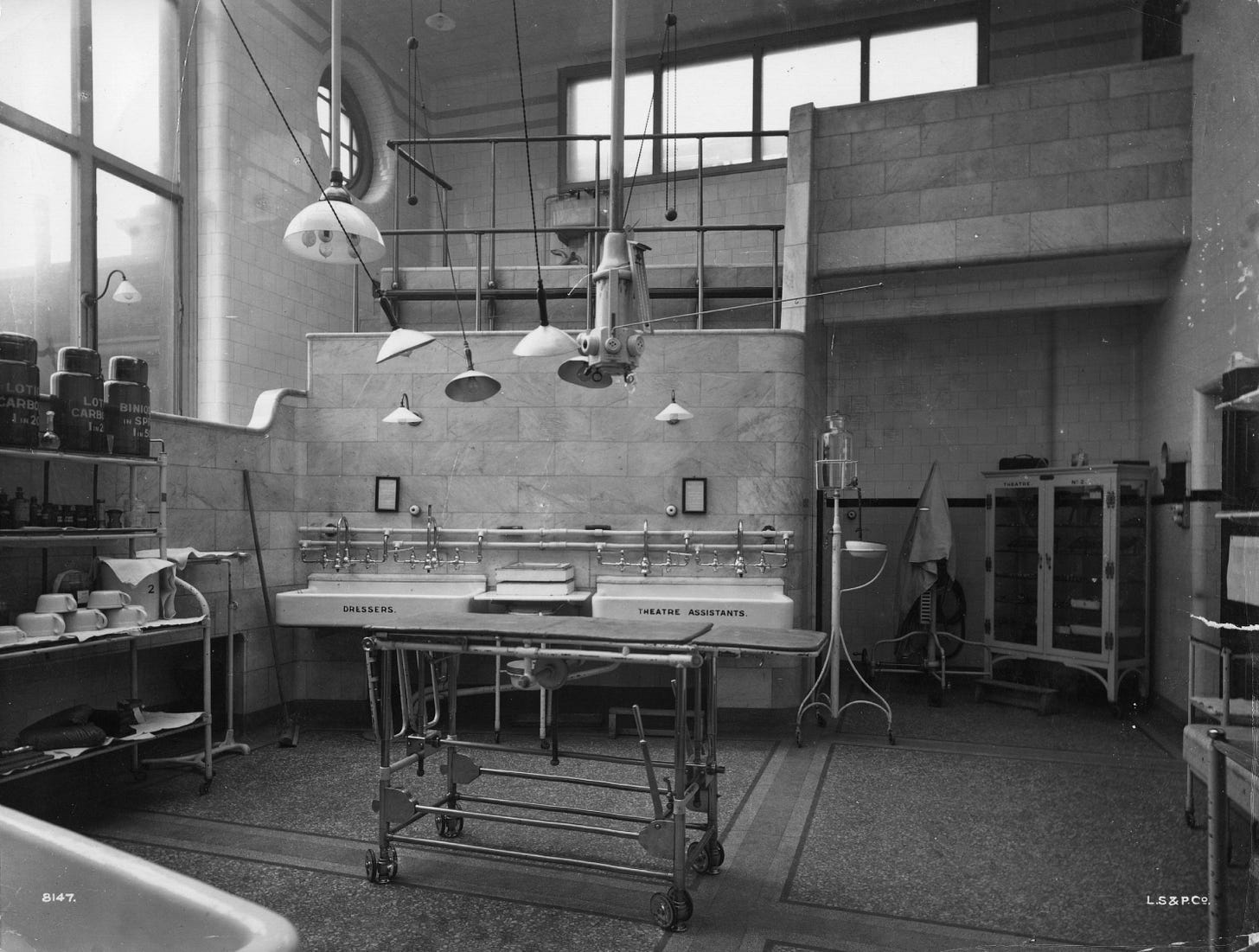
The Philosophy of Failure
I have written, by now, several thousand drafts. Most have been wrong in ways I have come to recognise. There are perhaps a dozen named failures that, between them, account for almost everything I have had to cut. Each post here will diagnose one.
Beyond Conventional Poetics: The Failure Mode Analysis
While conventional poetics focuses on how a poem succeeds — cataloguing its devices and celebrating its finished form — there is another way to understand the craft: through the “autopsy” of its failures. Most writing about poetry forgets the failures a draft has “eaten” to reach its final state.
By shifting focus to failure mode analysis, we can diagnose specific reasons why a draft might falter:
Reaching for abstraction when the work should stay with a thing.
Naming a feeling instead of letting it disclose.
Arriving at consolation the work hasn’t earned.
Borrowing a cadence that belongs to someone else.
Contemplating when they should act and so on.
Unlike traditional theory, this approach treats the poem as a site of labour and specific technical breakdowns, suggesting that we define poetry not just by what it is, but by the specific “wrong turns” it manages to avoid or repair.
How It Works
I pick a draft that didn’t make it, print it — either in full or as an extract — and walk through what stopped it.
The failures get named.
The repair, where there is one, gets sketched.
The taxonomy grows post by post.
By six months in, the publication will have a working vocabulary that I hope will be useful to anyone trying to write poems with care.
The Slab
The drafts on the slab will all be mine. Other people’s cuts are theirs to autopsy if they wish. Mine I can be specific about — specific enough that you can see what didn’t work without needing to take my word for it.
Landscape and Language
I write from Herefordshire, in the country between the Malverns and the Wye. That matters because the language for landscape and labour here is its own, and the craft thinking in these posts grows out of it. You’ll find more about hedges and orchards and rivers than about workshops or theory.
Subscription Tiers
Free: Available for the first three months.
Paid Tier: Quarterly workshops on a specific failure mode, occasional manuscript mini-feedback, and the full archive.
Founding Subscribers: Includes a single-poem deep edit at any point in the year.
About Me
I have an MA in Writing Poetry from the Poetry School and Newcastle University and am a regular attender of poetry workshops and writing groups. My poems are published in journals and anthologies and I’m working toward a first collection.
I had some great teachers: Glyn Maxwell and Tamar Yoseloff among them. Hat tip also to Jonathan Edwards, John Glenday and Hannah Lowe, each of whom have provided feedback on my poems.
Welcome to The Cutting Room. The first autopsy goes up Monday.
— Adam
This is brave - and a gift too. Thank you Adam.
What a productive provocation - particularly staying away from the abstract!